I believe that the body of knowledge that all people should be constantly aware of is political matters. This topic is something that all people should be educated on because if someone isn't educated on political matters, their vote for important elections can skew data. This issue is problematic because people don't know enough about politics to participate in something as crucial as a presidential or even state representative election.
I know a lot about political matters because I am informed from the news on TV. I also have a good vocabulary, so I don't typically need help from Google to assist me in grammar or simple vocabulary situations, such as finding synonyms or what not. Lastly, if the technological system were to crash tomorrow, I would be able to offer insight about writing and proper structure for it.
Monday, February 29, 2016

Technology Affecting the Youth
How much time do you spend on your cell phone everyday? about 2 hours.
How much time do you spend watching media or watching TV/Netflix everyday? maybe 1 or 2 hours.
How much time do you spend playing video games everyday? never.
What was the last book you read? the last book I read fully was Thirteen Reasons Why by Jay asher, but I am reading It's Kind of a Funny Story by Ned Vizzini right now.
When was the last time you went to a play? last year I went to my sister's play of Charlie Brown's Christmas.
What ways have I participated in civic engagement? helping at the soup kitchen every christmas.
PART I:
How much time do you spend watching media or watching TV/Netflix everyday? maybe 1 or 2 hours.
How much time do you spend playing video games everyday? never.
What was the last book you read? the last book I read fully was Thirteen Reasons Why by Jay asher, but I am reading It's Kind of a Funny Story by Ned Vizzini right now.
When was the last time you went to a play? last year I went to my sister's play of Charlie Brown's Christmas.
What ways have I participated in civic engagement? helping at the soup kitchen every christmas.
POP QUIZ
PART I:
- Simon Cowell and Randy Jackson
- Forrest Gump
- Leonardo DiCaprio
- He has never received an Oscar so it was exciting
- Keeping up With the Kardashians, Mob Wives, The Real Housewives of Orange County
- Homer Simpson
- My Humps - Black Eyed Peas
PART II:
- Israel and Palestina
uhdon't know the answer- Paul Ryan
- press, property, speech
- Vincent Van Gogh
BachVerdi
Wednesday, February 24, 2016
QDW #1
Through my own personal experiences, I cannot argue that technology has played a significant role in my life. I also believe that there are both benefits and drawbacks to being in a technologically advanced world. To be completely honest, I would like to say that I wish that there wasn't such thing as social media; however, I know that social media can be a great source of sharing and receiving information. The problem with this generation is that we have become too dependent on social media to keep us informed, not particularly with political or educational matters, but on topics revolving around other people and the things they are doing in his or her free time. Sites such as Twitter and Facebook, that were founded on the principals of trying to create an outlet for information flow, have become places that people resort to for meeting people and sharing content.
While these types of websites offer the users a free streaming of resources based on people you follow, they also give people useful information based on your interests or what you search. In my opinion, I think that technology can be useful for people to benefit from. Personally, I am guilty of spending a lot of my free time on social media because it is an easy way to waste time. Another reason I use social media and search the web is when I want to distract myself; however, I find that I tend to do this more as I procrastinate getting work done. This can be a problem because it means that it causes more problems later on when I have to rush to get everything done.
Technology as a whole has benefitted our society in terms of advancing our knowledge of space and time, and the ability to create tools that can make things more convenient for users to use. In viewing the documentary with Dr. Baurlein, I have developed a few opinions on some of the statements he mentioned through his perspective. Below are my remarks on these topics:
Quote 1: "They have developed a brazen disregard for books and reading."
Through my personal experiences, I found that while some facts may be accurate of certain people or groups, a lot of the information provided could be technically hypocritical of a lot of teenagers. For instance, this quote specifically holds bias towards people like me. I can argue that this fact alone is untrue and hypocritical, because I am among the database of people he analyzes, and in my free time, I spend more time reading books than surfing the web. Obviously I alone am not that influential when you look at the broader scale of teenagers in America, however, I do believe that not all young people fall into this category.
Quote 2: "Lack of capitalization and IM codes dominate online writing. Without spellcheck, folks are toast." & "They get ridiculed for original thought, good writing."
I can see why this aspect of social media could be an argument for older generations to make, specifically on websites such as Facebook that are more diverse in age groups can notice these trends. This quote holds some truth, as a lot of kids online do tend to lack proper sentence structure when making statuses and when sharing information. I think that often times, kids online are trying to share their content quickly, and that is why they overlook correctness in sentence structure, but also another quote of his was that kids get ridiculed for being grammatically correct, which I also can agree with. If I were to share a post on Facebook with a couple paragraphs of content consisting of perfect grammatical flow, I know that I would get sarcastic comments about what I posted from friends.
Quote 3: "They make excellent jaywalking targets."
In his argument, he suggests that kids are a lot more taken away from reality when they are surfing the web or streaming through social media. I definitely can agree with this statement, because a lot of my friends will be physically with me when I am trying to have a conversation with them, but they won't mentally be present. For instance, if I were to try to tell something to a friend while he or she is on twitter, I guarantee only half of what I am saying will go through to them. This may also be true of his statement about jaywalking, because often times, kids will have their heads down, looking a their phones, when they are walking alone because they don't have company to distract their thoughts and keep them entertained.
While these types of websites offer the users a free streaming of resources based on people you follow, they also give people useful information based on your interests or what you search. In my opinion, I think that technology can be useful for people to benefit from. Personally, I am guilty of spending a lot of my free time on social media because it is an easy way to waste time. Another reason I use social media and search the web is when I want to distract myself; however, I find that I tend to do this more as I procrastinate getting work done. This can be a problem because it means that it causes more problems later on when I have to rush to get everything done.
Technology as a whole has benefitted our society in terms of advancing our knowledge of space and time, and the ability to create tools that can make things more convenient for users to use. In viewing the documentary with Dr. Baurlein, I have developed a few opinions on some of the statements he mentioned through his perspective. Below are my remarks on these topics:
Quote 1: "They have developed a brazen disregard for books and reading."
Through my personal experiences, I found that while some facts may be accurate of certain people or groups, a lot of the information provided could be technically hypocritical of a lot of teenagers. For instance, this quote specifically holds bias towards people like me. I can argue that this fact alone is untrue and hypocritical, because I am among the database of people he analyzes, and in my free time, I spend more time reading books than surfing the web. Obviously I alone am not that influential when you look at the broader scale of teenagers in America, however, I do believe that not all young people fall into this category.
Quote 2: "Lack of capitalization and IM codes dominate online writing. Without spellcheck, folks are toast." & "They get ridiculed for original thought, good writing."
I can see why this aspect of social media could be an argument for older generations to make, specifically on websites such as Facebook that are more diverse in age groups can notice these trends. This quote holds some truth, as a lot of kids online do tend to lack proper sentence structure when making statuses and when sharing information. I think that often times, kids online are trying to share their content quickly, and that is why they overlook correctness in sentence structure, but also another quote of his was that kids get ridiculed for being grammatically correct, which I also can agree with. If I were to share a post on Facebook with a couple paragraphs of content consisting of perfect grammatical flow, I know that I would get sarcastic comments about what I posted from friends.
Quote 3: "They make excellent jaywalking targets."
In his argument, he suggests that kids are a lot more taken away from reality when they are surfing the web or streaming through social media. I definitely can agree with this statement, because a lot of my friends will be physically with me when I am trying to have a conversation with them, but they won't mentally be present. For instance, if I were to try to tell something to a friend while he or she is on twitter, I guarantee only half of what I am saying will go through to them. This may also be true of his statement about jaywalking, because often times, kids will have their heads down, looking a their phones, when they are walking alone because they don't have company to distract their thoughts and keep them entertained.
Thursday, February 18, 2016
Reflection #1
Growing up, writing has
always been something that I had immense pleasure in doing because it comes
more naturally to me than most other things. This does not make me an expert at
writing by any standard, but I do believe that it did help me in regard to enhancing
and expanding my horizons as I grew as a writer. Despite my passion for reading
and writing, I definitely have run into several issues when it comes to being
an active reader. An active reader is someone who is able to evaluate and
determine important key concepts or ideas in a passage. A goal that I set for
myself at the beginning of the semester to become a better active reader was that
I hope to improve my annotating and comprehension skills. I think that when it
comes to annotating, visually it looks correct, but I am not truly picking out
the most important information in the text. I think a major aspect of
annotation that I need to work on is being able to describe the whole text
after I have completed my annotations to see if I completely understood what I
just read.
So far, I have worked on improving these goals by
annotating my own work after I have written it, not only for this class but for
other assignments as well. For instance, when I revise a paper for my friend I
work on weeding out information that is or is not necessary for the paper and I
think that the critical thinking involved in this process is aiding my attempts
at improving my active reading skills. However, I think that I am still able to
work towards my goal in other ways that I will try to do in the future. This
includes annotating my readings for classes such as history and communications
because I typically have a lot to read for these two classes.
Up to this point in the semester, I can already see an
improvement in my writing ability. I think that as I do more and more
assignments, I am slowly starting to connect the active reading concepts I was
taught in class with my own work. An example through my own work is the
difference between my first and forth journal entries. In the first, I had all
of the concepts needed for the topic; however, I don’t think that it was my
best work. In my forth entry, I had much clearer ideas that flowed together in
a stronger way. This may have been from the setup of the two different assignments,
but I can see in my own writing that I improved my writing skills from the
first to forth. I think that I definitely have room to improve on my
responsibility in this course by working harder to keep track of the
assignments posted on the blog page. But despite this, I think that every
single entry I make is to the absolute best of my ability and I am proud of my
improvements thus far.
A major takeaway of my development so far is that I have
learned to analyze my own work more thoroughly and efficiently. I used to be a
writer that would skim through my own work when I am finished and not clearly
peruse through what I wrote to look for simple errors that can easily be fixed.
Overall, I think I have become a “less lazy” writer in a sense. Despite these
accomplishments, this does not mean that I am only getting better. I think that
one thing I need to improve on majorly is my responsibility and participation
in class. I do contribute to class discussions when I have an idea that I think
is sufficient enough to share with the class, but I do think that I can
definitely offer more of my personal insight during our class discussions. For
the syllabus, a “B” student is described as a person who “arrives on time, attends
class regularly, and is focused on the matters at hand.” I believe that I am best described as this student
because I always come on time and am attentive to the topics being discussed. I
think I am not an "A" student yet, because I am still working on my speaking
skills and I need to improve on the participation aspect of the grading scale. I
am not the best public speaker, so that has always been something that has held
me back, but I know that I am able to do anything I set my mind to, so I think
one takeaway I have from this assignment is that I need to work on improving in
that aspect specifically and I will keep this in mind for the remainder of the
semester in this course.
Tuesday, February 9, 2016
Journal #5
Brainstorming (choice 1):
The thick, rich canopy of soft willow tree leaves hung carefully just above the crest of the slowly decaying birch wood of the playhouse my dad built me when I was little. An abundance of dandelions littered the plush grass that stretched for what seemed like miles. The mellifluous acoustics of the cardinals and bluejays fill the air around me, singing songs of summer and sentimental memories. The place where I learned to tune a guitar and strum a few chords on the ukulele. The place where I would go to seek comfort, or to simply escape from the real world for a little while. The place where my sister and I shared memories, and where she shared her first kiss. It was a place of solidarity, amenity, and placidity. It was my childhood backyard.
Monday, February 8, 2016
Journal #4
The societal pressure that is put on the average human to fit into a mold that is considered "average" or "acceptable" has become a problem of great proportions. From the way one dresses to the way one expresses his or her personality through body piercings and tattoos, judgement is found among people everywhere. It is important to look not only at a person for their personality, but their intentions and abilities as well. A lot of times, appearances play a big role in how a person is viewed to other people. In fact, some major companies can have a say on if a person is hired or not based on their appearance; this can mean either the way he or she dresses or even the tattoos and piercings that person has on their bodies. While your appearance has no correlation to your ability to do tasks or even your personality at all, this does not stop others from having judgmental thoughts about you with appearances that do not fit the mold of this society's social norms.
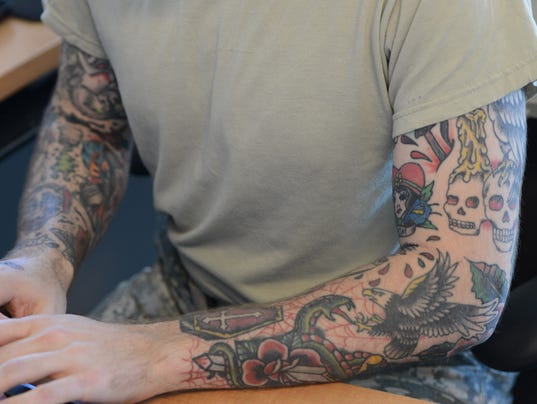 From the article on CNN, the author states: "The lesson I hope to teach others through my life is that it's important to see past appearances." This quote is important to recognize for people who find themselves in situations where they feel judged or are exuding judgmental vibes towards others because this society has put too much emphasis on the image of normality. Throughout this article, the author describes his experiences being a teacher while still expressing his personal tastes through his many tattoos and piercing choices. In my own opinion, the ways people express themselves do not reflect who that person is as a human. However, this does not excuse me from saying I have never fell into the category of the one who judges others. It's easy to make assumptions based on appearances because we are all brought up on the notion that there is a social standard for all humans to fit into.
  For a lot of people in foreign places, marking your body is a cultural statement. In the second article, the author expresses some of his encounters with people in different areas and how their culture can have an affect on their appearances. He expresses that "the important part is the meaning behind the marks." In this excerpt, the author is trying to express to the reader the significance of the tattoos or piercings to people in foreign places. To us, we see it as a personal statement, because that is why people get tattoos in America. To them, the markings can mean a lot more. For a lot of people everywhere, a tattoo is something that has a lot of thought put into it and represents something that is meaningful to him or her. This notion makes sense considering that getting a tattoo is the most permanent thing a person can do to their body. As the quote says, if the markings don't have meaning behind them, then they must not be that important to the person.
  There are plenty of people all around the world who have a genuine jokester attitude. In the third article, this can be seen as you scroll through the pictures of all of the ironic and funny tattoos that were strategically placed on these people's bodies. Just because these tattoos aren't necessarily sentimental or extremely meaningful to the person does not mean that the tattoo is something that these people should regret. Each of the pictures represented in the third article expressed the carefree attitudes of the people who got the tattoos. The fact that these specific tattoos aren't really that meaningful might cause some people to be judgmental towards them because they don't hold a strong significance. For example, my parents are both very against any tattoos or extra piercings anywhere on my body, however, if I were to get an ironic tattoo like one of the ones shown, I know for a fact that my mom would never forgive me. There is definitely a difference between a comically and emotionally significant tattoo. I believe that might be why some people can get offended when they see a tattoo with little to no meaning because it is such a permanent decision.
Friday, February 5, 2016
Journal #3
Quote 1: "I felt like those characters in soap operas who have an evil twin. The two, of course, can never be in the same room..."
Quote 2: "Every once and a while, though, somebody comes up with a new permutation and I am once again reminded that I am an immigrant with a foreign name."

 The author definitely added some deep points about the severity of what shunning a name can do to a person's mental health. I think that this story is important for people to read because so often, in america, people make racial comments towards other cultures, ethnicities, or even appearances just based on the belief that anyone in a certain culture or religion all believe the same things. If that is true, then I wonder how there is an apparent divide between people who do and do not support gay marriage in the catholic church. People need to realize that being a part of a certain religion or affiliation does not mean that all of those people worship in the same ways. It also does not mean that those people necessarily have all the same beliefs as people who are causing harm to others.
 Stereotyping based on a person's name will always be an issue. Stereotyping in general will also always be an issue. The problem is that people are very stubborn when it comes to issues based on politics and religion and personal thoughts on racial situations. Even people who mean well can accidentally stereotype a person if they simply cannot pronounce his or her name and make a joke about it. Maybe if more americans were better educated on different cultures, it would be easier for people to not only pronounce names correctly, but also break the confines of the stereotypical wall that has been built up by people who couldn't care less about any other culture other than their own. Every person at some point in their life has been both a victim and guilty of stereotyping, but becoming a more culturally diverse country would help to solve this issue of race and ethnicity.
Notes On Freakenomics:
- Response: For a young girl growing up in America, which is known as the land of opportunity and diversity, Firoozeh struggles with issues revolving around acceptance among her peers. For anyone, not just people of foreign descent, one main thing we, as humans, strive for is to feel accepted and desired by others. If one feels that their identity is being threatened by the social confines of a culturally bias society, it can affect that person's mental stability immensely. For Firoozeh, she felt uncomfortable being herself in classrooms and social situations, which is why she adopted the name "Julie" to fit in better with her peers. Having to hide a huge part of your identity, such as the name you were given at birth, can be mentally exhausting. In her words, she described it as being a character in a soap opera that has to be two people at once, but never letting the two be somewhere at the same time. This analogy only reinforces the strain that just her name alone had on her everyday life.
Quote 2: "Every once and a while, though, somebody comes up with a new permutation and I am once again reminded that I am an immigrant with a foreign name."
- Response: The pressure that is put on Julie to fit into a mold created by society's idea of what it means to be "normal" leads her to be consistently reminded of just how different her culture is than the "american norm" when she has to use her real name. Despite having a different background, it does not make her any less american than anyone else. While it is understandable for some people to not be able to pronounce her name accurately, I can definitely see why she would feel alienated and annoyed by the perpetual reminder that her name is not normal compared to most americans.
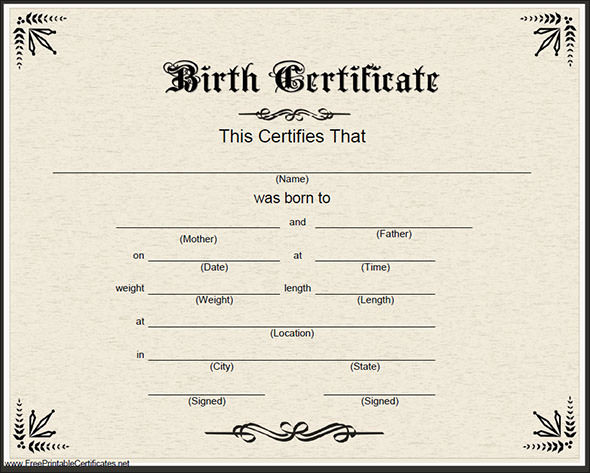
A person's name says a lot about him or her. It can indicate their cultural upbringing, their style, their religion...but most importantly it is their identity. This is why when parents are choosing a name for their child, it is often a hard decision to make since it is a life long commitment. The name you are given at birth signifies much more than what is written on a certificate. It represents your parents personalities and sometimes origins of distant family history.
I would personally never change my name. My parents named me after my mother's grandmother who passed shortly before I was born, so my name in itself holds a lot of sentimental meaning to my family. I also have had this name my whole life so I can't even imagine having to respond to any other name.
The author definitely added some deep points about the severity of what shunning a name can do to a person's mental health. I think that this story is important for people to read because so often, in america, people make racial comments towards other cultures, ethnicities, or even appearances just based on the belief that anyone in a certain culture or religion all believe the same things. If that is true, then I wonder how there is an apparent divide between people who do and do not support gay marriage in the catholic church. People need to realize that being a part of a certain religion or affiliation does not mean that all of those people worship in the same ways. It also does not mean that those people necessarily have all the same beliefs as people who are causing harm to others. Stereotyping based on a person's name will always be an issue. Stereotyping in general will also always be an issue. The problem is that people are very stubborn when it comes to issues based on politics and religion and personal thoughts on racial situations. Even people who mean well can accidentally stereotype a person if they simply cannot pronounce his or her name and make a joke about it. Maybe if more americans were better educated on different cultures, it would be easier for people to not only pronounce names correctly, but also break the confines of the stereotypical wall that has been built up by people who couldn't care less about any other culture other than their own. Every person at some point in their life has been both a victim and guilty of stereotyping, but becoming a more culturally diverse country would help to solve this issue of race and ethnicity.Notes On Freakenomics:
- cultural segregation is the cultural gap between white people and black people
- black americans are more likely to give their kids more unique names
- people with black names are 33% less likely to get called back for an interview
- a name can influence your ability to get a job
- the name you are given cannot influence if you will or will not become a screw up
Thoughts on the documentary: I think that this documentary was trying to express to people that the stereotyping that is associated with a person's name has become an issue in today's society. For a person who is completely qualified for a job position, but is less likely to receive the job, only adds to the unfairness of the process of looking for a job. For instance, a man named "Tyrone" is less likely to get a job than a man named "Todd" even if they have all the same credentials and are equally as fitted for the same position, simply because his name is associated with black culture.
Tuesday, February 2, 2016
Journal #2
Important quote: "Proponents of this hypothesis in its most radical form contend that America is in the midst of a culture war, with two opposing armies fighting on behalf of their views."
Reactions: This quote represents the clear split amongst the population of America between political, cultural and social views. This does not have to mean individuals in general, it can be based on an area as a whole (as seen with the different places that he describes). People who tend to live in the more red areas tend to have more conservative views while people who live in generally in blue areas have more liberal views.
What does where you're from say about who you are? Based on the article, the areas of which people are from tend to affect their moral views when it is being related to politics. I am from a republican-based town, so most of the people residing in my town tend to be more on the conservative side (including my parents). However, areas only an hour away, such as New York City, tend to be prominently more democratic in their views. Despite being so close in distance, it only goes to show the cultural gap amongst the different areas across America.

Reactions: This quote represents the clear split amongst the population of America between political, cultural and social views. This does not have to mean individuals in general, it can be based on an area as a whole (as seen with the different places that he describes). People who tend to live in the more red areas tend to have more conservative views while people who live in generally in blue areas have more liberal views.
What does where you're from say about who you are? Based on the article, the areas of which people are from tend to affect their moral views when it is being related to politics. I am from a republican-based town, so most of the people residing in my town tend to be more on the conservative side (including my parents). However, areas only an hour away, such as New York City, tend to be prominently more democratic in their views. Despite being so close in distance, it only goes to show the cultural gap amongst the different areas across America.
Do you agree/disagree with the author? Why? I agree with some aspects of the authors views. I believe he is correct in saying that the divide is apparent in today's society. I also agree with the fact that he says "Although the nation is growing more diverse, it's only doing so in certain spots." I think that this quote is accurate because a lot of people who are more on the conservative side tend to have closed off minds when it comes to issues that deal with morality. As more young Americans are entering the age to vote, the divide is becoming more skewed since kids on social media are being influenced by pop culture telling them that being liberal is more culturally correct.
Do you recognize these places? When he was describing the different places that he was observing, I would recognize some of the names of the towns but not the speculations that were affiliated with those towns. Despite not knowing all of the areas he mentions in the article, I do not agree with a lot of the different assumptions he made about all of the people residing in that area. For instance, he describes Franklin County as basically the worst place in America. In his words, this area is full of "heroin addicts, pregnant teens, reckless teenage drivers, young women in halter tops on the prowl, and gay people at church." I think that even if some of these things might be accurate, it may also be a bias speculation to make considering he doesn't actually live there. A lot of his observations come across as bias, even with his sufficient evidence, because he simply does not hold back when it comes to voicing his opinions on the different people and places that he is encountering.
On which side (red/blue) might you belong? How so? If I were to be on one side more than the other, I think I would fall more into the blue category. When I look at politics, I tend to have more democratic/liberal views on most issues. I can attest to the idea that not all kids grow up to have the same political views as their parents because both of mine have very conservative outlooks on politics. Maybe since I grew up in such a republican-supporting home, it made me want to be an independent. The problem with me is that I see both sides to each affiliation, however I support liberal views more than i do for conservative views thus putting me in a more Blue America mindset.
What assumptions does the author make about the people who live in these places? I listed the assumptions he made about Franklin County above under the third question. However in addition to those assumptions, it seemed as if most of his observations were based on a bias perspective of the places he went to because he was obviously a part of Blue America.
What do you think? What does "home" look like to you? My area around my home is typically more of a conservative area. Along with most of my neighbors, my parents and relatives are included in the republican support campaign. Typically, however, I have found that more kids my age tend to have more of a liberal outlook on many political issues because teenagers are highly influenced by social media and popular TV shows. I think that the problem with society is that a lot of people are just not very educated in a lot of political matters that are going on in the world today. On social media, both politics and pop culture that are being expressed to many teens are represented in a more liberal outlook than conservative, so that might be why a lot of people in my generation feel like they are more left wing than anything.
Essay:
Despite the obvious bias that is
affiliated with this article, the author offers the reader plenty of
information about the areas that he went to on his quest for information about
each place’s culture. Along with his many observations about these specific
areas around America, he made one key statement that stood out to me as a
reader. This quote reads: “Proponents of this
hypothesis in its most radical form contend that America is in the midst of a
culture war, with two opposing armies fighting on behalf of their views.” This
quote represents the clear split amongst the population of America between
political, cultural, and social views. This does not have to mean individuals
in general; it can be based on an area as a whole (as seen with the different
places that he describes throughout the article). People who live in the mostly
red areas tend to have more conservative views while people who live in blue
areas typically have more liberal views. The issue that revolves around this
clear divide between two different viewpoints is that each side truly believes
that their outlook on a lot of topics is more correct than the other opinion. This
battle for assurance of their accuracy causes problems because neither side
wants to admit that their opinion is not legitimate.
Based on the article, the areas that people are
from tend to affect their moral views when it is being related to politics. I
am from a republican-based town, so most of the people residing in my town tend
to be more on the conservative side (including my parents). However, areas only
an hour away, such as New York City, tend to be prominently more
democratic in their views. Despite being so close in distance, it only goes to
show the cultural gap amongst the different areas across our country.
I
agree with some aspects of the author’s views. I believe he is correct in
saying that the divide is apparent in today's society. I also agree with the
fact that he says "Although the nation is growing more diverse, it's only
doing so in certain spots." I think that this quote is accurate because a
lot of people who are more on the conservative side tend to have closed off
minds when it comes to issues that deal with personal morality. As more young
Americans are entering the age to vote, the divide is becoming more skewed
since kids on social media are being influenced by pop culture telling them
that being liberal is more culturally correct.

When
he was describing the different places that he was observing, I would recognize
some of the names of the towns but not the speculations that were affiliated
with those towns. Despite not knowing all of the areas he mentions in the
article, I do not agree with a lot of the different assumptions he made about
all of the people residing in that area. For instance, he describes Franklin
County as basically the worst place in America. In his words, this area is full
of "heroin addicts, pregnant teens, reckless teenage drivers, young women
in halter tops on the prowl, and gay people at church." I think that even
if some of these things might be accurate, it may also be a
bias speculation to make considering he doesn't actually live there.
A lot of his observations come across as bias, even with his sufficient
evidence, because he simply does not hold back when it comes to voicing his
opinions on the different people and places that he is encountering.
If I
were to be on one side more than the other, I think I would fall more into the
blue category. When I look at politics, I tend to have more democratic/liberal
views on most issues. I can attest to the idea that not all kids grow up to
have the same political views as their parents because both of mine have very conservative
outlooks on political issues. Maybe since I grew up in such a
republican-supportive home, it made me want to be an independent. The problem
with me is that I see both sides to each affiliation, however I support liberal
views more than I do for conservative views thus putting me in a more Blue
America mindset.


The
area around my home is typically more of a conservative area. Along with most
of my neighbors, my parents and relatives are included in the republican
support campaign. Typically, however, I have found that more kids my age tend
to have more of a liberal outlook on many political issues because, again, teenagers
are highly influenced by social media and popular TV shows. I think that the
problem with society is that a lot of people are just not very educated in a
lot of political matters that are going on in the world today so they rely heavily on social media (a generally bias source) to get their information. On social media,
both politics and pop culture that are being expressed to many teens are
represented in a more liberal outlook than conservative, so that might be why a
lot of people in my generation feel like they are more left wing than anything.
Word Choice:
RED
tractor pulls, rider mowers, hunting, religious, homophobic, powerboats, snow mobiles, drive ATV's, churches are everywhere, QVC, the power bowlers tour, hunting, not as culturally educated (in a sense) as blue.
BLUE
Thai restaurants, NPR, Starbucks, cosmopolitan, sophisticated, sail boats, cross-country ski, hike, vineyard tours, illegal aliens, Doris Kearns Goodwin, socially conscious investing, read more books, attend more plays.
tractor pulls, rider mowers, hunting, religious, homophobic, powerboats, snow mobiles, drive ATV's, churches are everywhere, QVC, the power bowlers tour, hunting, not as culturally educated (in a sense) as blue.
BLUE
Thai restaurants, NPR, Starbucks, cosmopolitan, sophisticated, sail boats, cross-country ski, hike, vineyard tours, illegal aliens, Doris Kearns Goodwin, socially conscious investing, read more books, attend more plays.
Subscribe to:
Comments (Atom)